The Great Year: What the Ancients Said
Across India, Babylon, Egypt, Greece, Persia, Israel, China and the Americas, the ancient sources describe long cycles of ages, and the sky turns through a long cycle of its own.
Reading note. Each tradition is given in its own terms. Items not yet checked against a primary source are listed in the verification register at the end of Section 18.
1. The numbers
- The Earth’s axis leans 23.4° from the pole of its orbit.
- The equinox drifts against the stars by 50.29″ of arc a year, as measured today.
- At the Surya Siddhanta’s rate of 54″ a year, the full circle takes 24,000 years.
- At Ptolemy’s rate of 1° per century, it takes 36,000 years.
- Kali Yuga lasts 432,000 years, the same span Berossus gives the kings before the Flood.
- The Talmud gives the world 6,000 years, then a seventh millennium of rest.
- The Zoroastrian world lasts 12,000 years, in four periods of 3,000.
- About AD 500, Zu Geng measured the Chinese pivot star more than a degree from the pole.
2. The cycle in the sky: precession
The Earth’s axis leans 23.4° from the pole of the Earth’s orbit. The pull of the Sun and the Moon on the Earth’s equatorial bulge, acting on a spinning Earth, swings that axis slowly round a circle, as the axis of a spinning top swings. One full turn takes about 25,800 years. This is the precession of the equinoxes, the Great Year.
Over half a Great Year, about 12,000 years, the axis swings half-way round its circle. The lean stays 23.4°, but it points the opposite way among the stars, from near Polaris to near Vega (Figure 2).
Figure 3 shows one full cycle in steps of 3,000 years.
| Source | Years per degree | Full circle |
|---|---|---|
| Measured today (50.29″ a year) | about 71.6 | about 25,772 years |
| The 60-count | 72 | 25,920 years |
| Surya Siddhanta (54″ a year) | 66.7 | 24,000 years |
| Ptolemy (1° per century) | 100 | 36,000 years |
3. The pole star: what the ancients measured and thought
The celestial pole is the point the Earth’s axis points to in the sky; every star circles it once a day. As the axis swings round its circle, the pole moves among the stars, and the star nearest to it changes. Only a few bright stars lie close to its path.
| Star | Nearest the pole | Closest distance |
|---|---|---|
| Vega (α Lyrae) | about 12,000 BC | about 5° |
| Thuban (α Draconis) | about 2830 BC | about 0.1° |
| Kochab (β Ursae Minoris) | about 1100 BC | about 7° |
| Polaris (α Ursae Minoris) | about AD 2100 | about 0.5° |
| Errai (γ Cephei) | about AD 4000 | about 3° |
| Alderamin (α Cephei) | about AD 7500 | about 3° |
| Deneb (α Cygni) | about AD 9800 | about 7° |
| Vega (α Lyrae) | about AD 13,700 | about 5° |
Dates and distances are approximate; each star serves as the pole star for centuries either side of its closest approach.
Egypt
- The Pyramid Texts send the dead king to join the “imperishable stars”, the stars that circle the pole and never set.
- The northern shaft of the King’s Chamber in the Great Pyramid points close to where Thuban crossed the meridian about 2500 BC.
- The Old Kingdom pyramids are aligned to true north within a fraction of a degree.
Kate Spence proposed in 2000 that the builders found north by waiting until two stars circling the pole, Kochab and Mizar, stood one directly above the other. That line passed through the pole in about 2467 BC. As the pole moved, the line drifted, which would explain why earlier pyramids point slightly east of north and later ones slightly west. Measurements of the Abu Roash pyramid do not fit the method, and it remains a proposal.
India
- Dhruva, “the fixed one”, is the pole. The Puranas picture the heavens as a celestial porpoise (śiśumāra) with Dhruva at the tip of its tail.
- The Sun, Moon and stars are bound to Dhruva by “aerial cords” and turn about it (Vishnu Purana 2.9; Bhagavata Purana 5.23).
- The texts give Dhruva’s position, not a star’s name; the star marking it has changed over time. Part 2 examines the identifications.
- In the Vedic marriage rite the husband shows the pole star to the bride as a sign of constancy.
- The Maitri Upanishad lists the moving of the pole star (dhruvasya pracalanam) among the signs that nothing is permanent.
Greece
- Eudoxus (4th century BC) wrote that a certain star stays always in one place and is the pole of the world.
- Hipparchus (about 130 BC) corrected him: at the pole there is no star, only an empty place with three stars near it.
- Hipparchus measured the drift of the stars against the equinoxes; Ptolemy later gave it as 1° per century.
China
- Chinese astronomy centred on the pole. Sima Qian (about 100 BC) places the god Taiyi there, with the Northern Dipper as his chariot.
- Under the Han no bright star stood at the pole; a faint star of the “North Pole” asterism served as its marker.
- Yu Xi (about AD 330) identified the slow shift of the equinox against the stars, the “annual difference” (suichā).
- Zu Geng found the “pivot star” (niuxing), long taken as the pole star, more than a degree from the true pole.
Egypt, India, Greece and China each gave the pole a central place: the turning point of the heavens, the seat of a god, the destination of the dead. Greek, Chinese and Indian astronomers measured that the pole and the equinoxes move, and Hipparchus, Zu Geng and the Maitri Upanishad say outright that the pole star is not fixed. No surviving text describes the full sequence of pole stars around the circle, or ties it to the ages.
4. India
The Vedas
In the Rigveda, yuga means a generation or an era, not a world age. The dice names that later named the ages appear in the Aitareya Brahmana (7.15) as states of a person: Kali lying down, Dvapara rising, Treta standing, Krita walking.
The Mahabharata and Manu
The Mahabharata and the Manusmriti (1.69–71) set out four ages in the ratio 4:3:2:1, named after the throws in the dice game: Krita (4), Treta (3), Dvapara (2) and Kali (1). Each age has a dawn and a dusk of one tenth its length. Together they make 12,000 years. In each age dharma, pictured as a bull, loses a leg.
The Puranas
The Puranas multiply the ages by 360, as divine years. One mahayuga is 4,320,000 years; Kali alone is 432,000. Seventy-one mahayugas make a Manu’s age; fourteen Manus make a kalpa, a day of Brahma, of 4.32 billion years. The world dissolves and is renewed at each scale.
| Satya (Krita) | Treta | Dvapara | Kali | |
|---|---|---|---|---|
| Dharma (the bull’s legs) | 4 | 3 | 2 | 1 |
| Dominant quality (Bhagavata 12.3) | sattva | rajas, with sattva | rajas and tamas | tamas |
| Vishnu’s colour (Mbh 3.148) | white | red | yellow | black |
| Lifespan (Manu 1.83) | 400 | 300 | 200 | 100 |
| War and conflict | none | kingship and punishment begin | the Kurukshetra war | rulers plunder; fear of war and famine |
| Puranic length (years) | 1,728,000 | 1,296,000 | 864,000 | 432,000 |
The astronomers
- Aryabhata (AD 499) made the four ages equal, 1,080,000 years each. Brahmagupta (AD 628) defended the 4:3:2:1 ratio against him.
- The Surya Siddhanta describes the stars swinging back and forth by 27° at 54″ a year. At that rate a full circle takes 24,000 years.
- Varahamihira (6th century) records that the solstice, once in mid-Ashlesha, had moved to Punarvasu in his day.
The Jain and Buddhist wheels
The Jain wheel of time has a descending half and an ascending half, each of six spokes; the present is the fifth spoke of the descending half. The Buddhist great kalpa has four phases of formation, abiding, destruction and emptiness; within it human lifespans fall from 80,000 years to 10 and rise again.
A later reading: Sri Yukteswar (1894)
In The Holy Science, Sri Yukteswar reads the ages as human years, not divine years, and runs them descending and then ascending: 4,800 + 3,600 + 2,400 + 1,200 years each way, a cycle of 24,000 years. He ties the cycle to the Sun’s motion and places the low point at AD 499, the epoch of Aryabhata.
Other Indian views
Views differed. The Mimamsa school (Kumarila, 7th century) held that the world is never dissolved. The materialist Charvakas rejected the cycles altogether. The Buddha left the question of whether the world is eternal unanswered.
5. Babylon
The star catalogue MUL.APIN, compiled by about 1000 BC, lists the constellations along “the path of the Moon”. In the 5th century BC Babylonian astronomers fixed twelve equal signs of 30°; the earliest known horoscope is dated 29 April 410 BC. The Babylonians counted in base 60, and their schematic year was 12 months of 30 days.
The first sign, later Aries, was LÚ.ḪUN.GÁ, the “Hired Man”, a labourer hired for a fixed term, linked to the shepherd god Dumuzi. Its abbreviated sign LU can also be read UDU, “sheep”; this is the usual explanation for the Greek Ram.
The priest Berossus (about 290 BC) gave 120 sar of 3,600 years, 432,000 years, for the kings before the Flood. According to Seneca, he taught that the world floods when all the planets meet in Cancer and burns when they meet in Capricorn.
6. Egypt
The Egyptians distinguished two kinds of time: neheh, the time that returns, as the Sun returns each day; and djet, enduring time. Creation was Zep Tepi, “the First Time”, renewed at every sunrise. In the Book of the Dead (chapter 175), Atum says he will one day return all he has made to the primeval waters.
The Egyptians divided the night sky into 36 decans, star groups each rising for about ten days; from them came the twelve hours of the night. The 365-day civil year drifted against the rising of Sirius and returned to it every 1,460 years, the Sothic cycle.
Greek visitors recorded what the priests told them. Herodotus (2.142) was told of 341 generations of kings, about 11,340 years, in which the Sun had “four times moved from his wonted place, rising twice where he now sets and setting twice where he now rises”. Plato (Timaeus 22–23) records the priests of Sais telling Solon that the world suffers repeated destructions by fire and flood, and that Egypt alone kept the records.
The Dendera zodiac
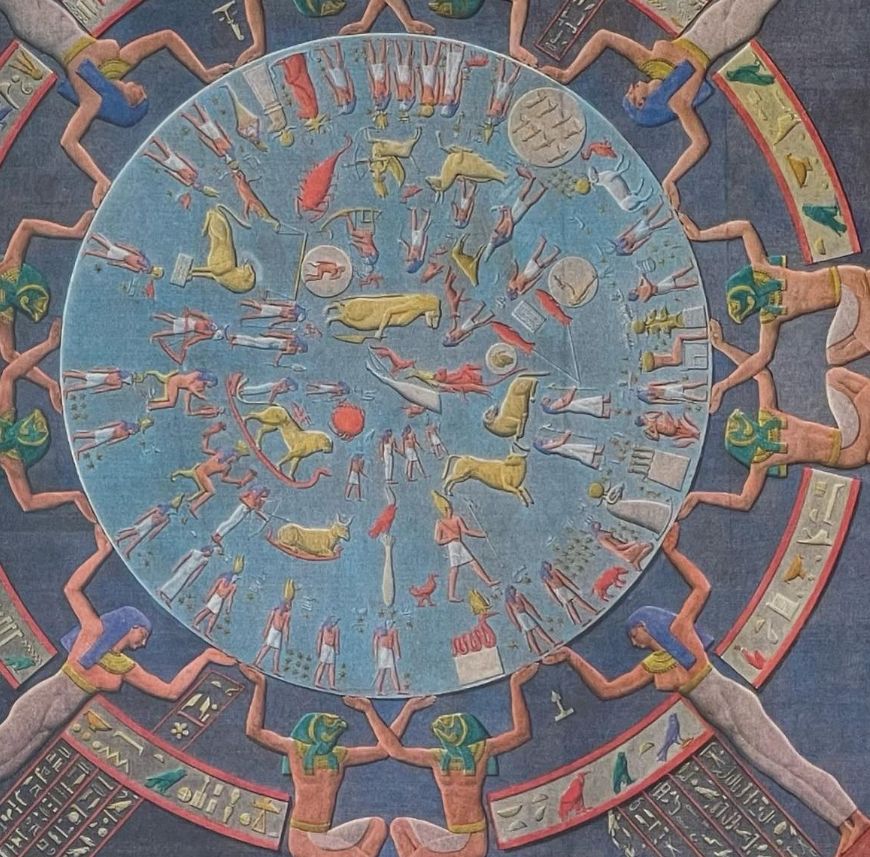
The circular zodiac from the Temple of Hathor at Dendera (about 50 BC, now in the Louvre) is a map of the sky. It is centred on the north celestial pole and shows the twelve signs, the 36 decans around the rim, the five planets and two eclipses of 52 and 51 BC. The zodiac circle is not centred on the disc; one study identifies a second pole marked at Thuban, the pole star of the 3rd millennium BC (not checked).
7. Greece and Rome
- Hesiod (Works and Days, about 700 BC): five races, golden, silver, bronze, heroic and iron, each worse than the last. He lived in the iron race.
- Plato: the “perfect year” is complete when all the heavenly circuits return together (Timaeus 39d).
- In Plato’s Statesman myth (268e–274e) the god steers the cosmos in the age of Kronos, then releases it; it reverses and declines in the age of Zeus.
- Plato’s “nuptial number” (Republic 546) is commonly read as 12,960,000, which is 60⁴.
- Heraclitus: a Great Year of 10,800 years (Censorinus 18).
- The Stoics: the world ends in fire at the close of a Great Year and repeats.
- Hipparchus (about 130 BC) measured the backward drift of the equinox; Ptolemy (Almagest, 2nd century AD) gave it as 1° per century, a full circle in 36,000 years.
- Virgil (Fourth Eclogue, 40 BC): “the great order of the ages is born anew”; the golden age returns with the birth of a child.
- The Etruscans and Romans counted saecula of about a century; the Etruscans were allotted ten.
- A comet in 44 BC was declared the start of the tenth saeculum. Augustus held the Secular Games in 17 BC.
8. Persia
The Zoroastrian Bundahishn (compiled in the 9th century AD from older material) gives the world 12,000 years in four periods of 3,000. Zoroaster appears at the start of the last 3,000. In the final millennia three saviours, the Saoshyants, are born of his preserved seed; the last raises the dead and renews the world. Some sources are reported to assign each millennium to a zodiac sign (not checked).
9. Israel
The Talmud (Sanhedrin 97a–b) gives the world 6,000 years: 2,000 of chaos, 2,000 of Torah, and 2,000 as the days of the Messiah, followed by a seventh millennium of rest, the world’s Sabbath, from Psalm 90:4, “a thousand years in your sight are like a day”. On the Hebrew count, the days of the Messiah run from year 4000 (about AD 240) to year 6000 (about AD 2240). The present year is 5787.
Tradition speaks of two messiahs: the son of Joseph, who falls in battle, and the son of David, who rules (Sukkah 52a). The Dead Sea Scrolls expect the “messiahs of Aaron and Israel” (1QS 9:11). The smaller cycles of the Law are the sabbatical seventh year and the fiftieth-year jubilee; later Kabbalah speaks of cycles of 7,000 years, seven of them making 49,000.
10. China and the Americas
Shao Yong (11th century) gave a world cycle (yuan) of 129,600 years: 12 epochs × 30 revolutions × 12 generations × 30 years. The world opens in the early epochs and closes in the last ones.
The Maya Long Count runs in baktuns of 144,000 days; the present creation of 13 baktuns (about 5,125 years) began in 3114 BC. The Popol Vuh describes earlier creations. The Aztec Legend of the Suns describes four earlier worlds ended by jaguars, wind, a rain of fire and a flood; the present Fifth Sun is to end in earthquakes.
11. The medieval reckonings
The Persian astronomer Abu Ma’shar (9th century) dated the rise of prophets and dynasties by the conjunctions of Jupiter and Saturn: every 20 years, a shift of element about every 240 years, and a full return about every 960 years. Augustine and Bede divided history into six ages, modelled on the six days of creation, with Christ opening the sixth.
12. The twelve signs across the civilisations
The signs began as the Babylonian path of the Sun and passed to the Greeks, to Ptolemaic Egypt, to India through the Yavanajataka (2nd century AD), and into the Hebrew and Arabic traditions. Each kept the twelve and gave them its own names and images. No ancient source treats the signs as twelve ages; that use is modern.
| Sign | Babylonian | Greek | Egyptian (drawing) | Sanskrit | Hebrew | Arabic |
|---|---|---|---|---|---|---|
| ♈ Aries | LÚ.ḪUN.GÁ, the Hired Man (Dumuzi) | Krios, the Ram | 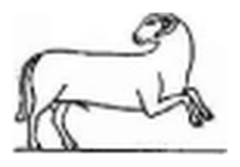 a ram | मेष Meṣa, ram | טלה | الحمل al-Ḥamal, lamb |
| ♉ Taurus | GU₄.AN.NA, Bull of Heaven | Tauros, the Bull | 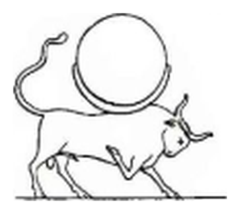 a bull with a sun disc | वृषभ Vṛṣabha, bull | שור | الثور al-Thawr, bull |
| ♊ Gemini | MAŠ.TAB.BA.GAL.GAL, Great Twins | Didymoi, the Twins | 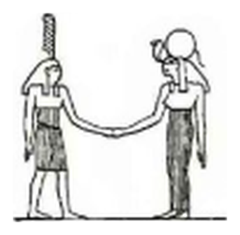 a man and a woman holding hands | मिथुन Mithuna, couple | תאומים | الجوزاء al-Jawzāʾ |
| ♋ Cancer | AL.LUL, the Crab | Karkinos, the Crab | 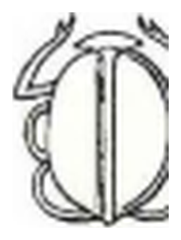 a scarab beetle | कर्क Karka, crab | סרטן | السرطان al-Saraṭān, crab |
| ♌ Leo | UR.GU.LA, the Lion | Leōn, the Lion | 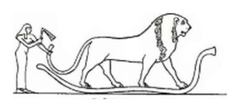 a lion standing on a serpent | सिंह Siṃha, lion | אריה | الأسد al-Asad, lion |
| ♍ Virgo | AB.SIN, the Furrow (Shala, ear of barley) | Parthenos, the Maiden with wheat | 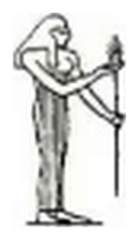 a standing woman | कन्या Kanyā, maiden in a boat | בתולה | السنبلة al-Sunbula, ear of grain |
| ♎ Libra | ZI.BA.AN.NA, the Scales (Shamash) | Chēlai / Zygos, Claws, then Balance | 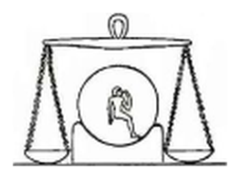 scales, a figure in a disc | तुला Tulā, man holding scales | מאזנים | الميزان al-Mīzān, scales |
| ♏ Scorpio | GIR.TAB, the Scorpion (Ishhara) | Skorpios, the Scorpion | 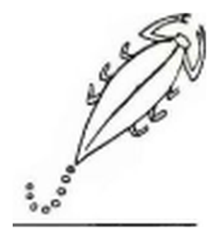 a scorpion | वृश्चिक Vṛścika, scorpion | עקרב | العقرب al-ʿAqrab, scorpion |
| ♐ Sagittarius | PA.BIL.SAG, winged archer, scorpion tail | Toxotēs, the Archer | 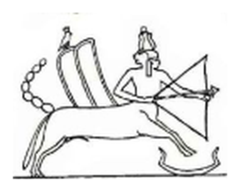 a winged archer with a scorpion's tail | धनु Dhanus, bow | קשת | القوس al-Qaws, bow |
| ♑ Capricorn | SUḪUR.MAŠ, Goat-Fish (Ea) | Aigokerōs, the Goat-Horned | 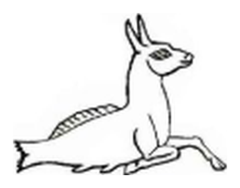 a goat with a fish's tail | मकर Makara, sea-creature | גדי | الجدي al-Jady, kid |
| ♒ Aquarius | GU.LA, the Great One (Ea pouring water) | Hydrokhoos, the Water-Pourer | 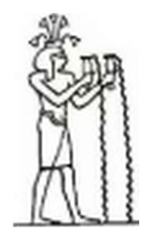 Hapi pouring two streams | कुम्भ Kumbha, pot | דלי | الدلو al-Dalw, bucket |
| ♓ Pisces | KUN.MEŠ, the Tails | Ichthyes, the Fishes |  two fish with a square of water | मीन Mīna, two fish | דגים | الحوت al-Ḥūt, fish |
Egyptian drawings from “Signs of the Zodiac”, p. 315 of an early 20th-century Egyptology work supplied by the author (source not yet identified); the Pisces drawing shows the upper fish and the square of water only. Sources differ on whether the Egyptian Cancer is a scarab or a crab. The Sefer Yetzirah (ch. 5) also assigns a Hebrew letter to each sign.
India kept an older division as well: the 27 nakshatras, the lunar mansions of 13°20′, each with a ruling deity and an animal. Each sign holds two and a quarter nakshatras; each nakshatra has four quarters, so 27 × 4 = 108 = 12 × 9.
13. The numbers the sources share
| Number | Where it appears |
|---|---|
| 12 | Babylonian signs and months; Zoroastrian millennia; Shao Yong’s epochs |
| 60 and 360 | Babylonian counting; the 360° circle; the divine year |
| 432,000 (2 × 60³) | Kali Yuga; Berossus’s kings before the Flood |
| 4,320,000 | The Puranic mahayuga |
| 12,960,000 (60⁴) | Plato’s nuptial number as commonly read |
| 129,600 | Shao Yong’s world cycle (60⁴ ÷ 100) |
| 10,800 and 21,600 | Heraclitus’s Great Year, and twice it |
| 24,000 | The Surya Siddhanta’s rate of 54″ a year; Yukteswar’s cycle |
| 25,920 (432 × 60) | The Great Year at 72 years per degree |
| 36,000 | Ptolemy’s precession; 60⁴ days of 360-day years |
14. Turning points: who appears when an age turns
| Tradition | Who appears | When |
|---|---|---|
| Hindu | Avatars of Vishnu | Whenever dharma declines (Gita 4.7–8) |
| Hindu | Parashurama | Between Treta and Dvapara |
| Hindu | Krishna | The close of Dvapara |
| Hindu | The Buddha | The start of Kali |
| Hindu | Kalki | The end of Kali |
| Jain | 24 Tirthankaras | Third and fourth spokes of each half |
| Buddhist | Maitreya | When lifespans rise to about 80,000 years |
| Zoroastrian | Zoroaster; three Saoshyants | The last 3,000 years; the final millennia |
| Jewish | Messiah son of Joseph; son of David | Within the years 4000–6000 |
| Christian | Christ | The opening of the sixth age |
| Roman | The child of the Fourth Eclogue | The return of the golden age |
| Babylonian | Xisuthros, the flood hero | The end of the kings before the Flood |
15. The sources compared
| Tradition | Stated cycle | Shape | How it ends or renews |
|---|---|---|---|
| Hindu Puranic | 4,320,000 years; 4:3:2:1 | Decline, then renewal; repeats | Kalki ends Kali; Satya returns |
| Yukteswar | 24,000 years | Descending, then ascending | Ascent back to Satya |
| Jain | Two halves of six spokes | Rising and falling | The ascending half begins |
| Buddhist | Great kalpa, four phases | Lifespans fall, then rise | Destruction by fire, water or wind, then re-formation |
| Babylonian | 432,000 years | Repeating | Flood and fire, by planetary conjunction |
| Egyptian | Neheh; Sothic 1,460 years | Returning time | Return to the primeval waters (Book of the Dead 175) |
| Hesiod | Five races | Decline | Zeus destroys the iron race |
| Plato, Statesman | Two ages | Alternating reversal | The god takes the tiller again |
| Stoic | One Great Year | Repeating | World fire, then the same world again |
| Zoroastrian | 12,000 years | Towards renewal | Resurrection and renewal |
| Jewish | 6,000 + 1,000 years | Towards rest | The Sabbath millennium |
| Shao Yong | 129,600 years | Opening and closing | The world closes and reopens |
| Maya / Aztec | Eras of about 5,125 years; five Suns | Repeating creations | Each world destroyed, a new one made |
| Christian | Six ages | Towards an end | The eternal Sabbath |
16. The variation in timing
The sources agree on the shape of the cycle far more than on its length or its dates. The lengths they give span from a century to billions of years.
| Source | Length of the cycle or age |
|---|---|
| Etruscan / Roman saeculum | about 100–110 years |
| Abu Ma’shar’s full conjunction return | about 960 years |
| Egyptian Sothic cycle | 1,460 years |
| Maya era of 13 baktuns | about 5,125 years |
| Jewish week of millennia | 6,000 + 1,000 years |
| Heraclitus | 10,800 years |
| Zoroastrian | 12,000 years |
| Mahabharata and Manu (human years); Yukteswar doubled | 12,000; 24,000 years |
| Ptolemy’s precession | 36,000 years |
| Shao Yong | 129,600 years |
| Berossus | 432,000 years |
| Puranic mahayuga | 4,320,000 years |
| Puranic kalpa, a day of Brahma | 4,320,000,000 years |
The dates they give for the start of the present age or world also differ:
| Source | Epoch |
|---|---|
| Byzantine creation era | 5509 BC |
| Archbishop Ussher’s creation date | 4004 BC |
| Hebrew creation era | 3761 BC |
| Maya: start of the present creation | 3114 BC |
| Hindu: start of Kali Yuga (Aryabhata) | 3102 BC |
| Etruscan: start of the tenth saeculum | 44 BC |
| Hebrew: start of the days of the Messiah (year 4000) | about AD 240 |
| Yukteswar: the low point of the cycle | AD 499 |
| Hebrew: the year 6000 | about AD 2240 |
| Puranic: end of Kali Yuga | about AD 428,899 |
Two of these epochs, the Maya creation (3114 BC) and the start of Kali Yuga (3102 BC), fall twelve years apart, in traditions with no known contact.
What holds across the variation
- A cycle of ages, not a single line of time.
- A high age at the beginning and a decline to the present.
- Destruction and renewal, often by flood and fire.
- A figure who appears at the turning of an age.
What does not hold
- The length of the cycle: from a century to billions of years.
- The dates of the ages: the epochs differ by thousands of years, and the end of Kali differs from the Hebrew year 6000 by more than 400,000 years.
- The direction: some sources describe only decline, others decline and return.
The author’s reading
The shape is shared and the timing is not. The author reads this as a memory held across the world, of a cycle whose length and position were lost and later estimated separately by each tradition. Other explanations put forward are a common human experience of cycles (the day, the year, the seasons), and the spread of Babylonian numbers and astronomy. The rest of the series examines whether the sky supports the first reading.
17. What this establishes, and what it does not
Established
- Traditions across Asia, the Near East, Europe and the Americas describe long cycles of ages, many of them with a high age, a decline and a return.
- The lengths and dates they give vary widely: from a century to billions of years, with epochs thousands of years apart.
- Several give the cycle a fixed number, and many of those numbers are built on 12, 60 and 360.
- Several place a figure, a saviour or an avatar at the turning of an age.
- The sky moves through a measured cycle of about 25,800 years, and the Surya Siddhanta’s rate gives a cycle of 24,000 years.
Not established
- That the ages of the traditions are the precession cycle.
- Only Ptolemy and the Surya Siddhanta tie their numbers to the movement of the stars; the others describe world ages in their own terms.
- That the traditions share one source. The numbers built on 60 may come from shared Babylonian counting rather than shared knowledge of the cycle.
- Where in the cycle we stand. That is the subject of Part 2.
Why investigate further
The same shape, a long cycle with a high age, a fall and a return, is described by sources written far apart in place and time, while their timing varies widely. The sky turns through a cycle of comparable length. Part 2 examines how our position in that cycle is measured; Part 3 examines what moves the sky.
18. Sources
Reference codes read source.work.passage and resolve on the Master Source Register, which carries every source used across this series.
- The Mahabharata and the Manusmriti, Mahabharata 1.2, 3.148, 3.186–189; Manusmriti 1.69–86 — the four ages in 4:3:2:1, the 12,000-year count, the bull of dharma, Vishnu’s colours, lifespans; Parashurama and Krishna at the junctions. Sections 4 and 14.
- The Puranas, Vishnu Purana 2.9, 3.3, 4.24, 6.1 and Bhagavata Purana 1.3, 1.17, 5.23, 12.2–3 — the 4,320,000-year mahayuga, the kalpa, the gunas of each age, the avatars, Kalki; Dhruva and the celestial porpoise. Sections 3, 4 and 14.
- Bhagavad Gita 4.7–8 — the avatar appears whenever dharma declines. Section 14.
- Indian astronomy, Aryabhata, Aryabhatiya (AD 499); Surya Siddhanta 3; Varahamihira, Brihat Samhita 3; Brahmagupta, Brahmasphutasiddhanta (AD 628) — equal yugas; the 54″ rate; the solstice shift; the defence of 4:3:2:1. Sections 2, 3 and 4.
- Vedic ritual and Upanishad, Paraskara Grihya Sutra 1.8; Maitri Upanishad 1.4 — the pole star shown to the bride; the moving of the pole star. Section 3.
- Sri Yukteswar Giri, The Holy Science (1894) — the 24,000-year ascending and descending cycle and its low point at AD 499. Section 4.
- Babylonian astronomy, MUL.APIN; H. Hunger and D. Pingree, Astral Sciences in Mesopotamia (1999) — the path of the Moon, the twelve signs, the Hired Man, the earliest horoscope (410 BC). Sections 5 and 12.
- Berossus, via Seneca, Natural Questions 3.29 — the 120 sars of 3,600 years; flood and fire by planetary conjunction. Section 5.
- Egyptian texts and reports, the Pyramid Texts; Book of the Dead 175; Herodotus 2.142; Plato, Timaeus 22–23; Censorinus, De Die Natali 18 — the imperishable stars, the return to the primeval waters, the 341 generations, the destructions by fire and flood, the Sothic cycle. Sections 3 and 6.
- A. Badawy and V. Trimble, papers on the Great Pyramid shafts (1964) — the alignment of the northern shaft with Thuban. Section 3.
- K. Spence, “Ancient Egyptian chronology and the astronomical orientation of pyramids”, Nature 408 (2000) — the Kochab–Mizar method and the date 2467 BC; with G. Magli’s reply on the Abu Roash data. Section 3.
- The Dendera zodiac, Louvre D 38 — the planisphere, its signs, decans, planets and eclipses. Section 6.
- Greek and Roman sources, Hesiod, Works and Days 106–201; Plato, Timaeus 39d, Statesman 268e–274e, Republic 546; Virgil, Eclogue 4; Servius on Eclogue 9.46 — the races, the Great Year, the Statesman myth, the nuptial number, the returning golden age, the tenth saeculum. Section 7.
- Hipparchus, Commentary on the Phaenomena of Aratus and Eudoxus 1.4.1 — no star at the pole; the correction of Eudoxus; Pytheas. Section 3.
- Ptolemy, Almagest VII — precession at 1° per century. Sections 2, 3 and 7.
- Zoroastrian, Bundahishn — the 12,000 years, Zoroaster and the Saoshyants. Section 8.
- Jewish sources, Babylonian Talmud, Sanhedrin 97a–b, Sukkah 52a, Avodah Zarah 9a; Community Rule (1QS) 9:11; Leviticus 25; Psalm 90:4 — the 6,000 years and the Sabbath millennium, the two messiahs, the jubilee. Section 9.
- Chinese sources, Sima Qian, Shiji, “Treatise on the Celestial Offices”; Zu Geng in the astronomical treatise of the Suishu; Shao Yong, Huangji jingshi — Taiyi at the pole, the pivot star off the pole, the 129,600-year cycle. Sections 3 and 10.
- The Americas, Maya Long Count inscriptions; Popol Vuh; Legend of the Suns — the creation of 3114 BC, the earlier worlds, the five Suns. Section 10.
- Medieval reckonings, Abu Ma’shar, Book of Religions and Dynasties; Augustine, City of God 22.30; Bede, De temporum ratione — the conjunction cycles and the six ages. Section 11.
- Source, not reviewed for this memo: S. Cauville, Le Zodiaque d’Osiris (Peeters, 1997) — the standard study of the Dendera zodiac, including the scarab or crab for Cancer.
- Verification register. Carried as reported and not checked against a primary source: the Zoroastrian assignment of a zodiac sign to each millennium; the second Dendera pole at Thuban; the faint star that marked the pole under the Han; the verse numbers of Paraskara Grihya Sutra 1.8 and Maitri Upanishad 1.4, and the date of the Upanishad; the source of the Egyptian drawings in Section 12, an early twentieth-century Egyptology work, page 315; the coloured Dendera image (source and licence pending).
Murrell, B.B. (2026). The Great Year: What the Ancients Said. Moral’s Mark — The Great Year, Part 1, v1.0 (6 November 2026). https://moralsmark.com/memo-great-year-ancients