The Curious Case of Benjamin and Rachel
A death and a birth at a single spot on the road — yet the site is placed in the lands of two tribes at once, the mother is left out of the family tomb, and the birthplace of the youngest son goes all but unmarked. The data, the open questions, and a mystery left to the reader.
1. A death on the road
Jacob’s household was on the move, south from Bethel toward Hebron, when Rachel went into hard labour. As she died she named the boy Ben-Oni; his father renamed him Benjamin (Genesis 35:16–20). How old Jacob was at that roadside the text never says. Working back from the few ages it does give — a hundred and thirty when he reached Egypt (47:9), Joseph thirty before Pharaoh (41:46) — puts him near a hundred; but that is arithmetic, not record, and the old reckonings disagree. Rachel’s own age is unstated too, but here there is something to reckon from. She married Jacob young — one tradition makes her and Leah twins of fourteen when he arrived, about twenty-one at the wedding — and was then barren for years while Leah bore son after son, her own first child coming only late (Genesis 29:31; 30:1, 22). Counting the seven years on to Joseph and roughly eight more to Benjamin, the traditional figures put her in her mid-to-late thirties at that roadside — most often thirty-six, capped near thirty-nine on the tighter chronologies: an older mother, late and long-awaited. But that, like Jacob’s hundred, is counting, not record. The text gives no number, and the readings run from the thirties to, in one outlier, past a hundred. Whichever count one takes, she was on the older side for bearing a child, which may have told in the hard labour the chapter records (35:16–17) — though Genesis names no cause but the birth itself.
The name itself is the first puzzle, and it carries real weight. Ben-Oni is usually rendered “son of my sorrow,” fitting a dying mother — but the word, ’oni from ’on, also means strength, vigour, the same word Jacob uses of Reuben, “the beginning of my strength” (Genesis 49:3). So the dying mother’s name already reads two ways, sorrow or strength. The name the father gives lands firmly on the strong side: Ben-yamin, “son of the right hand.” The right hand is no idle figure — across scripture it is the side of power, honour and blessing, the hand Jacob himself lays on the favoured son (Genesis 48:13–20), the place a king sets those he raises (1 Kings 2:19; Psalm 110:1). Of all twelve sons, Benjamin is the only one Jacob renames, and he renames him toward that side. The tribe that name founded gave Israel its first king. The significance is not read into the name; it is the name.
Two facts make the moment singular, and both will matter. First, Rachel is the only one of the patriarchs and matriarchs not buried in the cave of Machpelah at Hebron — Abraham and Sarah, Isaac and Rebekah, Leah, and in time Jacob himself all lie there together; Rachel alone lies apart, by the road. Second, Benjamin is the only one of Jacob’s twelve sons born in the land of Canaan at all — the other eleven were born far off in Paddan-Aram. The lost mother and the youngest son are both, in their way, off the map.
And the moment could hardly be larger. This is the mother whom Jeremiah will later hear weeping for the whole house of Israel, the matriarch tradition simply calls Rachel our mother, dying in open country to bring the nation its twelfth and last son. A death and a birth of that weight should have left the plainest of marks on the land. The strange thing is how unsure the map became about where to put it.
2. The grave in two tribes’ lands
Genesis says the burial was “on the way to Ephrath, that is, Bethlehem” (35:19), and repeats it when the dying Jacob recalls the scene (48:7). Bethlehem lies about six miles south of Jerusalem, in Judah. That should settle it.
But two later passages point the other way. When Samuel sends Saul home newly anointed, he tells him he will find two men “by Rachel’s tomb, in the territory of Benjamin at Zelzah” (1 Samuel 10:2). And centuries later Jeremiah hears “a voice in Ramah, Rachel weeping for her children” (Jeremiah 31:15). Neither verse gives a compass bearing — the text names a tribe and a town, not a direction. The northern placement is read off the map, not the page: Benjamin’s allotted land runs north from Jerusalem’s southern slope — the city itself sits on Benjamin’s southern border (Joshua 18:28) — and Ramah, if it is the Ramah of Benjamin (er-Ram), stands about five miles north of Jerusalem. Zelzah, named alongside the tomb, has never been identified. So the verses do not say “north”; they say Benjamin, and Ramah — and Benjamin’s land and that Ramah both lie on the far side of Jerusalem from Bethlehem. Where Genesis points six miles south into Judah, these point into Benjamin: two locations on opposite sides of the city, in the lands of two different tribes.
3. The three words
The whole weight of the southern claim hangs on a single phrase: “that is, Bethlehem.” Read closely, it has the shape of a later clarifying note — the kind a scribe adds to identify an old, unfamiliar name. The most authoritative student of the site’s topography, R. A. S. Macalister, argued in 1912 that the Bethlehem identification was exactly that: a copyist’s addition. Some go further and suppose two Ephraths — a northern one, near Bethel, where Rachel actually died, and the southern Bethlehem-Ephrathah of Judah — fused by the gloss. Others read the move more pointedly: a Judean note attaching a northern grave to Judah’s most famous town, lending the matriarch’s prestige to Bethlehem.
And the dispute is old, and serious. S. H. Hooke and S. V. Fawcett held the Bethlehem identification a late and mistaken gloss and placed the true Ephrath on Benjamin’s northern border; Clermont-Ganneau fixed the grave at remains near Wadi Fara in Benjamin, tying “Ephrath” to the Benjamite place-names Parah and Perat (Joshua 18:23). The rabbis caught the tension long before any of them: in the Sifrei, one teacher places the grave in Judah’s territory, another insists “she died in the territory of her son Benjamin”; the Tosefta raises the contradiction head-on.
The grave has been in two places for a very long time. What is not in dispute is that one phrase does all the work of fixing it in the south.
4. The positions, and what each rests on
There are really two questions here, and each has its camps. Where was the grave — north, in Benjamin, or south, at Bethlehem? And whose was the town — Benjamin’s once and then Judah’s, or Judah’s all along? Here is what each side stands on, laid out so the reader can weigh it instead of taking a verdict.
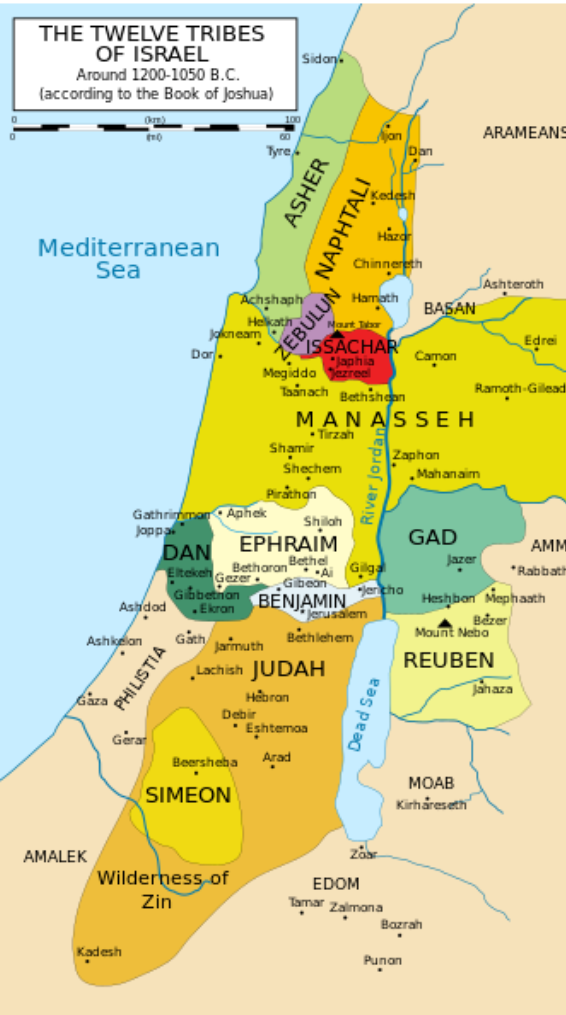
The grave was in the south, at Bethlehem — the traditional site. Genesis says it plainly: buried “on the way to Ephrath, that is, Bethlehem” (35:19; 48:7), and Jacob’s household was travelling south from Bethel to Hebron (35:27), straight past the town. Micah names “Bethlehem Ephrathah … among the clans of Judah” (5:2); Matthew lays Jeremiah’s Rachel-verse over Bethlehem (2:18); the southern shrine has been venerated for nearly two thousand years. And if “the territory of Benjamin” in 1 Samuel 10:2 is read as a border — the Hebrew gevul — the grave could sit on the Judah–Benjamin line near Jerusalem with no contradiction at all. Jerome, who lived in Bethlehem, held this reading and corrected those who did not. Taken on its own, the plainest reading of Genesis is the south.
The grave was in the north, in Benjamin. Two later books say so without arguing it: Samuel places the tomb “in the territory of Benjamin at Zelzah” (1 Samuel 10:2), and Jeremiah hears Rachel at Ramah, a town of Benjamin (31:15). Genesis points the same way twice over: she died “while they were still some distance from Ephrath” — before reaching it — and the next thing Jacob does is camp at Migdal Eder (35:21) and only then travel on south to Hebron (35:27), which puts the grave north of Migdal Eder. And Migdal Eder pins near Jerusalem, in Benjamin’s reach: Micah 4:8 equates it with the Ophel of Zion; Sheshonq I’s campaign list sets a Migdal near Bethel on the Ephraim–Benjamin border; 1 Chronicles 8:14 names an Eder among Benjamin’s own clans. “Ephrath,” on this reading, is the Benjamite Parah / Parat (Joshua 18:23; Jeremiah 13:4–7) — a spring that still carries the name in Benjamin — not Judah’s Bethlehem-Ephrathah at all. R. A. S. Macalister (1912) judged “that is, Bethlehem” a copyist’s gloss; W. F. Albright (1924) and Umberto Cassuto went further, reading the southern shrine as a later replacement raised by Ephraimites — Rachel’s own northern descendants — who carried their matriarch’s memory south after the northern kingdom fell. The rabbis had the split early (Sifrei, Tosefta), and nineteenth-century explorers recorded monumental tombs in Benjamin that local tradition called Kubr Benei Israel, “tombs of the sons of Israel.”
The town was Benjamin’s, then Judah’s. The earliest gazetteer we have — Eusebius’s Onomasticon, c. 320 — files Bethlehem, naming it the city of David where Christ was born, under the tribe of Benjamin; and the scholarship finds his tribal labels drawn from an older Jewish source-list compiled around Jerusalem, so the ascription is inherited, not invented. In the returnee census, Bethlehem is bracketed with a run of otherwise-Benjamite towns — Gibeon, Anathoth, Ramah, Geba, Michmas, Bethel (Nehemiah 7:26–32) — which one school (Nogah Hareuveni; the Associates for Biblical Research) reads as a Bethlehem within Benjamin. And tribal lands demonstrably moved: Simeon was swallowed into Judah (Joshua 19:1–9), Dan migrated north (Judges 18), and at the split Benjamin itself mustered with Judah (1 Kings 12:21), so Benjamite ground came to sit inside the kingdom of Judah. The map drawn by lot and the map of who held the ground are not the same map.
The town was always Judah’s. Wherever the texts name its tribe they call it “Bethlehem-Judah” (Judges 17:7; Ruth 1:1; 1 Samuel 17:12), and Micah ties it to “the clans of Judah” (5:2). The town predates the tribes entirely — written Bit-Lahmi in the Amarna tablets around 1350 BCE — so it was never renamed from Benjamin; the Chronicler has it founded by Judah’s own Caleb–Hur clan (1 Chronicles 2:50–51; 4:4). David, who made it famous, was a Bethlehemite of Judah, not a conqueror. Jerome corrected Eusebius’s Benjamin entry on exactly these grounds. And on the border itself, no positive evidence survives that the tribal lines were moved; one student of the site’s geography argues Benjamin was in any case too weak after Saul for Judah to have expanded at its expense.
These are the camps and what they rest on. The grave’s two strongest independent witnesses point to Benjamin; the town’s record, almost without exception, reads Judah; and the oldest map we have files Bethlehem under Benjamin and is corrected on the next page. The reader has the board.
5. Three things that do not add up
Set side by side, the anomalies are sharper than any one of them alone.
One grave, two tribes’ lands. For so momentous a burial the location should be unmistakable; instead scripture itself disagrees with scripture, the two traditions falling in the territories of two different tribes, and the southern fix rests on a single editorial phrase. Sites this important do not usually wander.
The matriarch left out of the tomb. Rachel alone of the six is not in the cave at Machpelah. The innocent reading is plain enough — she died suddenly, far from Hebron, and was buried where she fell. But that is not the end of it, because the family did move its dead long distances when it chose to: Jacob’s own body was carried all the way from Egypt to Machpelah, and Joseph, by an oath he laid on his people before he died — “ye shall carry up my bones from hence” (Genesis 50:25) — had his remains carried out of Egypt at the Exodus (Exodus 13:19) and buried at Shechem, in ground that “became the inheritance of the children of Joseph” (Joshua 24:32). A reburial beside the others was clearly possible, and in Joseph’s case deliberately arranged by the man himself. For Rachel it was not done. Why the beloved wife, of all of them, was left apart, the text never explains.
The birthplace nobody venerates. Benjamin was no minor son — the youngest, the only one born in the land, his father’s favourite after Joseph, and the founder of the tribe that would give Israel its first king. A birthplace of that weight might be expected to be marked, named, remembered. It is instead the one patriarchal site that cannot be confidently located at all — the same confused, contested, doubled spot as his mother’s grave.
Put together, the three are facts the text leaves unexplained. Genesis gives a practical reason for the roadside burial — a sudden death far from Hebron — but never says why she was not later carried to the cave, as Jacob and Joseph were carried to theirs. It records the grave in two tribes’ lands without reconciling them. It leaves the birthplace of the youngest son, the only one born in the land, all but unmarked. This memo sets the three down side by side and goes no further; what they amount to, if anything, is for the reader to weigh.
6. The line behind the names
Two facts of descent sit behind the map. Rachel bore two sons: Joseph — whose sons Ephraim and Manasseh became the heart of the later northern kingdom — and Benjamin, the tribe of Saul, Israel’s first king. David’s royal house of Judah descends not from Rachel but from Leah. After Saul fell at Gilboa the two houses divided the kingdom — the house of Saul over Israel in the north, the house of David over Judah in the south, “a long war between” them (2 Samuel 3:1) — a division reopened under Sheba the Benjamite (2 Samuel 20:1) and made permanent after Solomon (1 Kings 12). Bethlehem, where the southern tradition places the grave, is David’s own town. These are the families and the fault line behind the map; what they have to do with the grave, if anything, the record does not say.
7. The tomb behind the wall
The shrine pilgrims call Rachel’s Tomb stands today at the northern edge of Bethlehem, on the old road up to Jerusalem. The small white-domed chamber of the old photographs is still there at its heart — but it is no longer easy to see, sitting now inside a bunker-like shell of concrete, ringed by guard towers, razor wire and walls two storeys high. It is widely held to be the third-holiest site in Judaism, and Jewish women above all have come there for centuries to pray, especially on the 11th of Cheshvan, the traditional anniversary of Rachel’s death.
The building has been many things, and for long stretches nothing much at all. The Bordeaux pilgrim of 333 found a pyramid of stones; by the 10th century the geographers stop mentioning it, and it seems to have faded. The Crusaders revived it in the 12th century and raised the first real structure over the grave — a square building roughly twenty-three feet a side, four columns joined by pointed arches and crowned by a cupola, the form that survived (the arches walled up into an Ottoman wely in 1788) until Sir Moses Montefiore renovated it in 1841 and 1845. And the stones on the cenotaph were argued over from the start: the Crusader-era sources split on whether there were twelve, one for each son (Muhammad al-Idrisi, 1154; Pseudo-Bede, 12th century), or eleven (the Jewish traveller Benjamin of Tudela, 1169–71) — and Petachiah of Regensburg, in the same years, says plainly the count is eleven because Benjamin is left out, the twelfth being the newborn whose coming had cost his mother her life. The monument remembers Benjamin exactly as the story does: by his absence. He is the missing stone, and the pilgrims were counting his absence eight hundred years ago.
The fortification came in stages: walled and garrisoned by Israel in 1996; set on the Jerusalem side of the West Bank barrier from 2002, reached through Checkpoint 300, still called the Rachel’s Tomb checkpoint; an enclave by 2005, with more concrete added in 2015. The site is revered, and claimed, on more than one side — Kever Rachel to Jews, long known as the Bilal ibn Rabah Mosque to Muslims — and a 2005 UN report noted that, though holy to all three faiths, it had in effect been closed to Muslims and Christians while Israelis reach it freely from the Jerusalem side. Israel placed it on a national heritage list in 2010; UNESCO declared it part of occupied Palestinian territory.
The hard irony is that every wall, checkpoint and rival name surrounds the southern shrine — the Bethlehem site that rests, on the harder reading, on three added words. The most contested and most heavily guarded tomb in the land is the one whose location is least certain. The northern country near Ramah, where the plain words of Samuel and Jeremiah would lay her, has no wall, no checkpoint, almost no visitor at all.
8. The truth is still out there
So the case stays open, and that is the honest place to leave it.
What can be said with confidence is narrow and solid: the text places Rachel’s grave in the lands of two tribes; the southern location depends on a single phrase with the shape of a gloss; the matriarch alone was left out of the family tomb though reburial was clearly within reach; and the birthplace of a son the tradition counted significant — Benjamin, son of the right hand, father of the first king’s tribe — is the one such site no one can find. What cannot be said with confidence is why — why two territories, why no reburial, why so faint a memory of so large a place. The texts record the facts and withhold the reasons.
This memo does not close that gap, and is not meant to. It sets the data out cleanly, leaves the connections to the reader, and hands the question on. The places named here can be walked. The manuscripts can be read against one another. The ground near Wadi Fara and Ramah has barely been looked at with this question in mind. Somewhere along that road the mother of Israel was laid down, and the answer is still in the dirt and the text for anyone patient enough to follow it.
The mystery survives. The truth is still out there.
9. The verses behind it
Every claim here rests on named passages, gathered so the argument can be checked rather than taken on trust.
The death and the names. Rachel dies bearing Ben-Oni, renamed Benjamin, buried by the road with a pillar over the grave — Genesis 35:16–20, recalled at 48:7. ’On / ’oni as “strength, vigour” — Genesis 49:3 (Reuben, “the beginning of my strength”). Benjamin as “son of the right hand,” and the right hand as the side of power, blessing and honour — Jacob’s right hand on Ephraim, Genesis 48:13–20; the king’s right hand, 1 Kings 2:19; “sit at my right hand,” Psalm 110:1. The journey south from Bethel toward Hebron — Genesis 35:1, 6, 16, 27. Jacob’s age inferred (text gives no age at the birth): 130 at his arrival in Egypt — Genesis 47:9; Joseph 30 before Pharaoh — Genesis 41:46 (so Jacob about 91 at Joseph’s birth, near 100 by Benjamin’s — a back-calculation, and traditional reckonings vary). Rachel’s age likewise unstated: barren while Leah bore — Genesis 29:31; 30:1, 22; the twins-aged-fourteen tradition (Jewish Encyclopedia); traditional figures of about 36 (capped near 39 on tighter chronologies) at Benjamin’s birth — calculation, not text.
The two locations. South, at Ephrath / Bethlehem in Judah — Genesis 35:19–20; 48:7; “Bethlehem Ephrathah … among the clans of Judah,” Micah 5:2. In Benjamin — “the territory of Benjamin, at Zelzah,” 1 Samuel 10:2 (Zelzah unidentified); “a voice in Ramah,” Jeremiah 31:15, Ramah a town of Benjamin, Joshua 18:25, commonly identified with er-Ram about five miles north of Jerusalem; the Ramah verse laid over Bethlehem at Matthew 2:18. Neither verse states a direction; the northern placement is inferred from the tribal map.
The Migdal Eder sequence. Jacob camps at Migdal Eder after the burial and only then continues south to Hebron — Genesis 35:21, 27 — placing the grave north of Migdal Eder. Migdal Eder near Jerusalem: equated with the Ophel of Zion, Micah 4:8; a Migdal near Bethel on the Ephraim–Benjamin border in the campaign list of Sheshonq I (c. 925 BCE); an Eder among Benjamin’s clans, 1 Chronicles 8:14. “Ephrath” as the Benjamite Parah / Parat — Joshua 18:23; Jeremiah’s belt at “Parat,” 13:4–7.
The border. Judah’s northern line and Benjamin’s southern line are one boundary run in opposite directions — Joshua 15:5–11 and 18:15–19; along Jerusalem’s southern slope, 15:8 and 18:16. Jerusalem in Benjamin’s town-list, 18:28; the Jebusites unconquered by Judah, 15:63, and Benjamin, Judges 1:21, until David, 2 Samuel 5:6–9.
Bethlehem in Judah. “Bethlehem-Judah,” Judges 17:7; Ruth 1:1–2; 1 Samuel 17:12; founded by Judah’s Caleb–Hur clan, 1 Chronicles 2:50–51 and 4:4; written “Bit-Lahmi” in the Amarna letters, c. 1350 BCE.
Bethlehem’s tribe, contested. Eusebius’s Onomasticon (c. 320), entry Ephratha, files Bethlehem — “the city of David in which Christ was born” — under the tribe of Benjamin, with a later correction to Judah (Jerome); the Onomasticon’s tribal labels are held to derive from an older Jewish source-list compiled around Jerusalem. Bethlehem grouped with Benjamite towns (Gibeon, Anathoth, Ramah, Geba, Michmas, Bethel) in the returnee census — Nehemiah 7:26–32 — read by Nogah Hareuveni and the Associates for Biblical Research as a Bethlehem within Benjamin. Monumental tombs in Benjamin called Kubr Benei Israel by 19th-century explorers. Counter-view (no evidence the tribal borders moved; Benjamin too weak after Saul) — L. Ritmeyer.
The family tomb, and the moving of the dead. The cave of Machpelah at Hebron, bought by Abraham — Genesis 23; the burials of Abraham, Sarah, Isaac, Rebekah, Leah and Jacob — 49:29–32; 50:13. Jacob’s body carried from Egypt to Machpelah — Genesis 50:1–13; Joseph’s bones carried to Shechem — Genesis 50:25; Exodus 13:19; Joshua 24:32.
Rachel’s house and the split after Saul. Rachel the mother of Joseph and Benjamin, Leah the mother of Judah and Levi — Genesis 29:31–35; 30:22–24; 35:16–26. Joseph’s sons Ephraim and Manasseh — Genesis 41:50–52; 48; Benjamin the tribe of Saul — 1 Samuel 9:1–2. The house of Saul against the house of David: Ish-bosheth over Israel, David over Judah, “a long war” — 2 Samuel 2:8–11; 3:1; David over all Israel — 2 Samuel 5:1–5; Sheba’s revolt, “no portion in David” — 2 Samuel 20:1; the permanent split after Solomon — 1 Kings 12:16–20. Rachel weeping for the exiled north at Ramah — Jeremiah 31:15. Tribal allotments not fixed: Simeon’s towns absorbed into Judah — Joshua 19:1–9; Dan’s migration north — Judges 18; Benjamin mustering with Judah at the split — 1 Kings 12:21.
The reading. “That is, Bethlehem” as a likely gloss — R. A. S. Macalister (1912); the two-Ephraths and northern-grave case — S. H. Hooke, S. V. Fawcett and Clermont-Ganneau, the latter tying Ephrath to Parah / Perat in Benjamin, Joshua 18:23; the southern shrine as a post-722 BCE replacement built by Ephraimite refugees — W. F. Albright (1924, Tell el-Fûl) and U. Cassuto; the rabbinic split — Sifrei and Tosefta.
The tomb and its witnesses. A pyramid of stones to the Bordeaux pilgrim (333); unmentioned by the 10th-century geographers; revived and rebuilt by the Crusaders in the 12th century — a square structure (~23 ft) of four columns and pointed arches under a cupola. Period accounts: Muhammad al-Idrisi (1154, “twelve stones … a dome vaulted”); Benjamin of Tudela (1169–71, eleven stones, a cupola on four columns, Jews carving their names); Pseudo-Bede (12th c., twelve stones for the twelve sons); Petachiah of Regensburg (eleven stones, Benjamin excluded as the newborn). Arches walled up 1788; renovated by Sir Moses Montefiore, 1841 and 1845. Modern fortification 1996–2015; Checkpoint 300; 2005 UN report; 2010 Israeli heritage listing; UNESCO designation as occupied Palestinian territory.